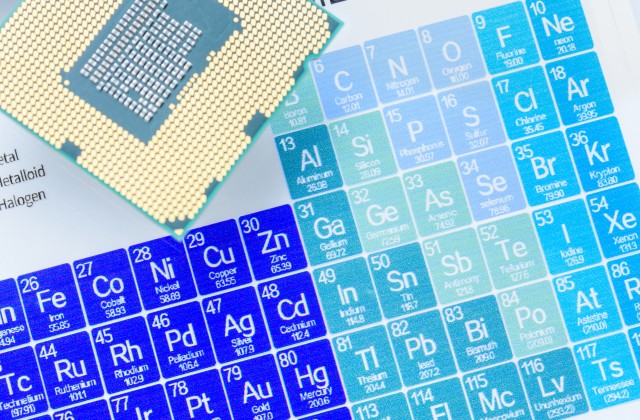
Medical technology accounts for just 1% to 2% of global memory chip demand. Yet 75% to 80% of medtech products rely on these chips, including personal protective equipment and consumables.
The race to build AI infrastructure is intensifying competition for memory chips, putting pressure on components used in everything from patient monitors to diagnostic equipment.
And medical technology isn't the only industry exposed.
When AI demand reshapes supply priorities
Memory chips offer one of the clearest examples.
AI servers require high-bandwidth memory (HBM) to process large amounts of information. But the companies producing advanced memory also manufacture conventional components used in vehicles, medical devices, and industrial equipment.
According to TrendForce, memory manufacturers are prioritizing advanced AI-related chips, tightening supplies of conventional memory used in automotive and industrial equipment. Average contract prices for one type, SLC NAND, rose an estimated 130% to 150% in the first half of 2026.
The result is tighter supplies and rising costs for industries that depend on conventional memory chips, even as demand for their own products remains unchanged.
In a July 2026 interview with Reuters, SK hynix CEO Kwak Noh-jung warned that 2027 could see the worst memory supply shortage in the industry's history.
"Our customer demand continues to go up, while our capacity has limitations." he said.
Even as chipmakers expand production, new capacity takes time to come online and may not serve the components other industries need.
The impact beyond data centers
Medical devices: When switching suppliers isn't simple
According to AdvaMed, 75% of surveyed respondents reported memory-related supply constraints.
Even when alternative chips exist, switching may require engineering work, testing, validation, and regulatory review. The process can take months or years.
A supplier's decision to prioritize another market can therefore affect production schedules and the availability of medical equipment.
Automotive: Securing supply before disruption
Modern vehicles rely on memory chips for everything from infotainment to driver-assistance systems. TrendForce warns that automotive and industrial applications with long product lifecycles face an elevated risk of prolonged shortages.
In 2026, General Motors signed a long-term memory supply agreement with Micron to strengthen access to critical technologies.
GM also described the agreement as a proactive move to safeguard critical parts of its supply chain rather than a response to any operational disruptions.
That distinction matters. Companies don't need to be experiencing a shortage to reconsider when and how they secure capacity.
Utilities: Planning years further ahead
Data centers need transformers and switchgear to connect to power networks, competing for equipment also used by utilities and industrial manufacturers.
According to Reuters, lead times for some large transformers exceeded three years in early 2026. California's Roseville Electric Utility is now purchasing equipment for some projects up to five years in advance.
Across these industries, the same pattern is emerging AI demand is changing not just what suppliers produce, but who gets access to limited capacity.
Why this becomes a planning problem
A company can forecast its own demand accurately and still face a supply constraint driven by someone else's growth.
The challenge may be even greater when techonology hyperscalers are purchasing more equipment than they can currently use. According to Business Insider, Amazon expected to receive roughly $5 billion in Nvidia AI servers, even as power shortages left some equipment sitting in warehouses.
This raises another question for supply chain planners: If major buyers are securing capacity before they can use it, how much supply will be left for everyone else?
That's what makes the AI boom particularly challenging for supply chain planners. Customer orders may remain stable while upstream manufacturers shift capacity toward AI-related products.
By the time those changes reach direct suppliers, production schedules and customer commitments may already be difficult to adjust.
Securing capacity early can protect production, but it also means committing capital before future demand is certain. Waiting preserves flexibility, but increases exposure if suppliers allocate capacity elsewhere.
The challenge isn't just anticipating demand. It's understanding how competition for shared supply could change what's available, and deciding when to act.
What supply chain leaders should be asking
Understanding exposure to the AI boom starts with looking beyond a company's own demand signals.
Three questions are worth asking:
- Where are we competing with AI for supplier capacity?
Map critical components beyond tier-one suppliers to identify where AI-driven demand could shift capacity away from your business. - Which critical components would be hardest to replace?
Assess alternative suppliers, qualification timelines, and the potential impact on production if a critical component becomes unavailable. - Where should we secure supply before constraints appear?
Weigh the cost of early capacity commitments against the risk of shortages, particularly for components with long lead times or limited alternatives.
The goal is not to predict every shortage. It is to recognize where competition is emerging and make decisions while alternatives remain available. The companies best positioned to navigate these shifts will be those that can see constraints early and act with confidence.
With end-to-end visibility through Kinaxis Maestro, supply chain leaders can understand how shifting supplier priorities affect their operations, evaluate trade-offs, and act before constraints turn into disruptions.
The next disruption may not begin with your own customers or products. It may begin with a supplier making room for someone else's growth.