The keynote at Kinexions EMEA 2026 started with a quick survey: Which Spanish football team reigns supreme, Real Madrid or FC Barcelona*? (Read until the end to find out who won!)
If only supply chain decisions were that straightforward.
From October 26 to 28, supply chain leaders, executives, and innovators from some of the world’s best-known brands came together in Spain for in-depth discussions, training, and—critically—networking. Together, they shared their strategies for planning supply chains through sustained regulatory, trade, and economic change.
What became clear is that while the pace of change is accelerating, change isn’t the issue. Supply chain latency is.
In this recap, you’ll discover:
- Key insights from major industries
- Highlights from keynote speeches
- The hot topics in supply chains today
And, of course, we’ll let you know which team came out on top in the survey.
Kinexions EMEA Highlights
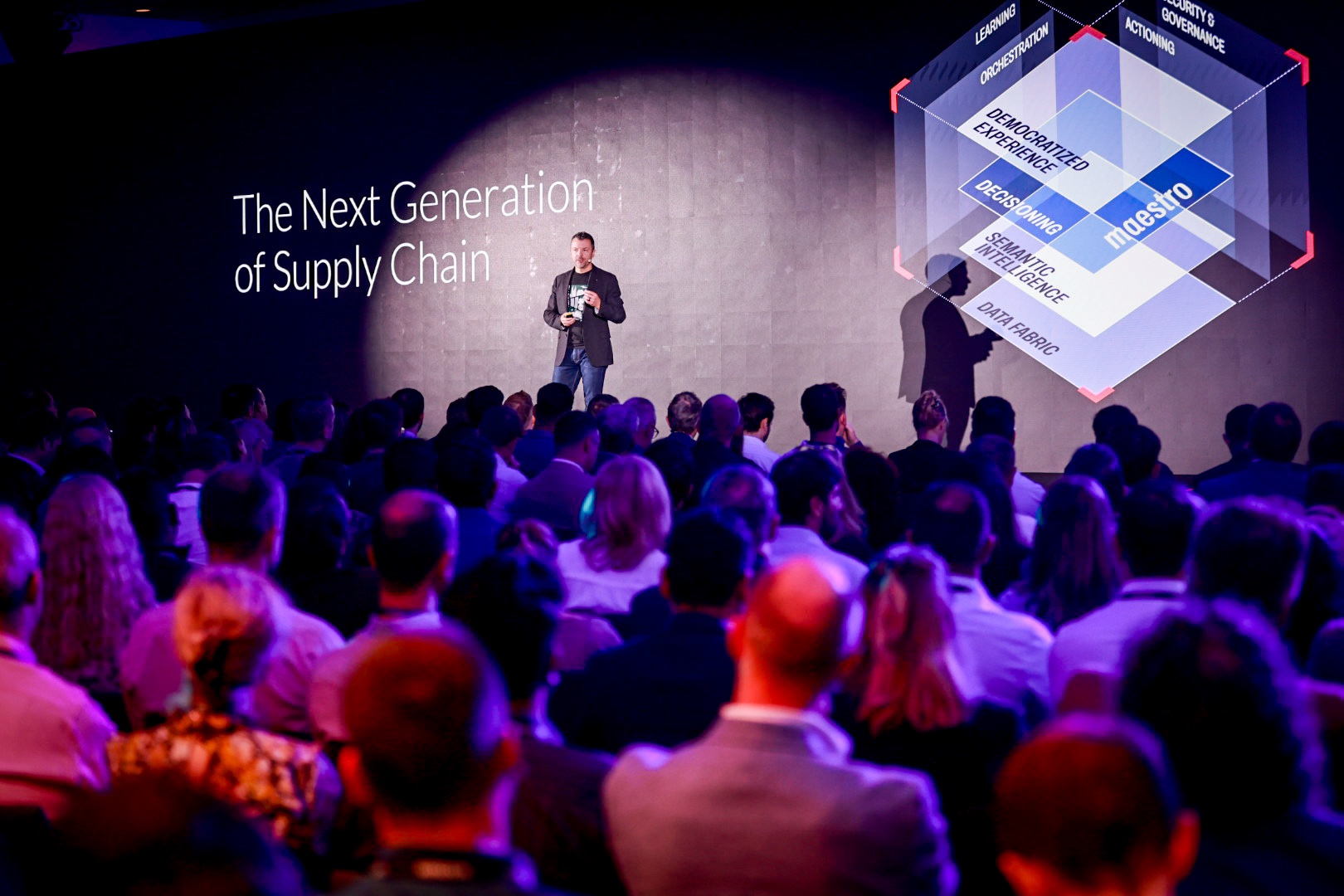
Automation, AI used to your advantage
Agentic AI can play a larger role in planning execution, leaving more room for humans to oversee governance and make judgement calls. Finding the right balance between human personas and agentic personas is a growing topic in supply chain.
Planning remains foundational
EMEA companies are sourcing supplies from different parts of the world. They’re producing, manufacturing, assembling, testing, and distributing. Moving things, whether by air or sea, takes time. Understanding the minutiae of the interdependencies helps connect decisions for better results.
Reducing latency can reduce chaos
Latency is real. It happens between getting signals and making decisions on those signals, and between making the decisions and acting on them. It causes companies to buffer supply chains with inventory, and its impact grows as execution nears. Reducing latency through orchestrated planning reduces chaos and customer disappointment.
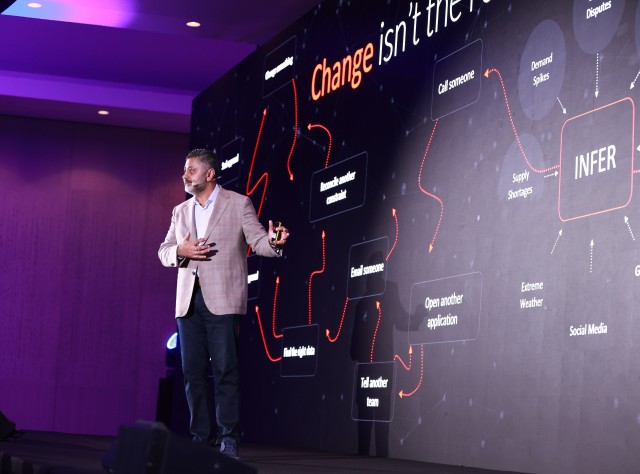
Watch Kinaxis CEO Razat Gaurav’s keynote speech to learn more about how Kinaxis can help reduce latency:
Demand is creating opportunity and challenges
In Europe, demand for AI infrastructure, energy transition, semiconductors and aerospace has created a huge opportunity – an equally huge challenge.
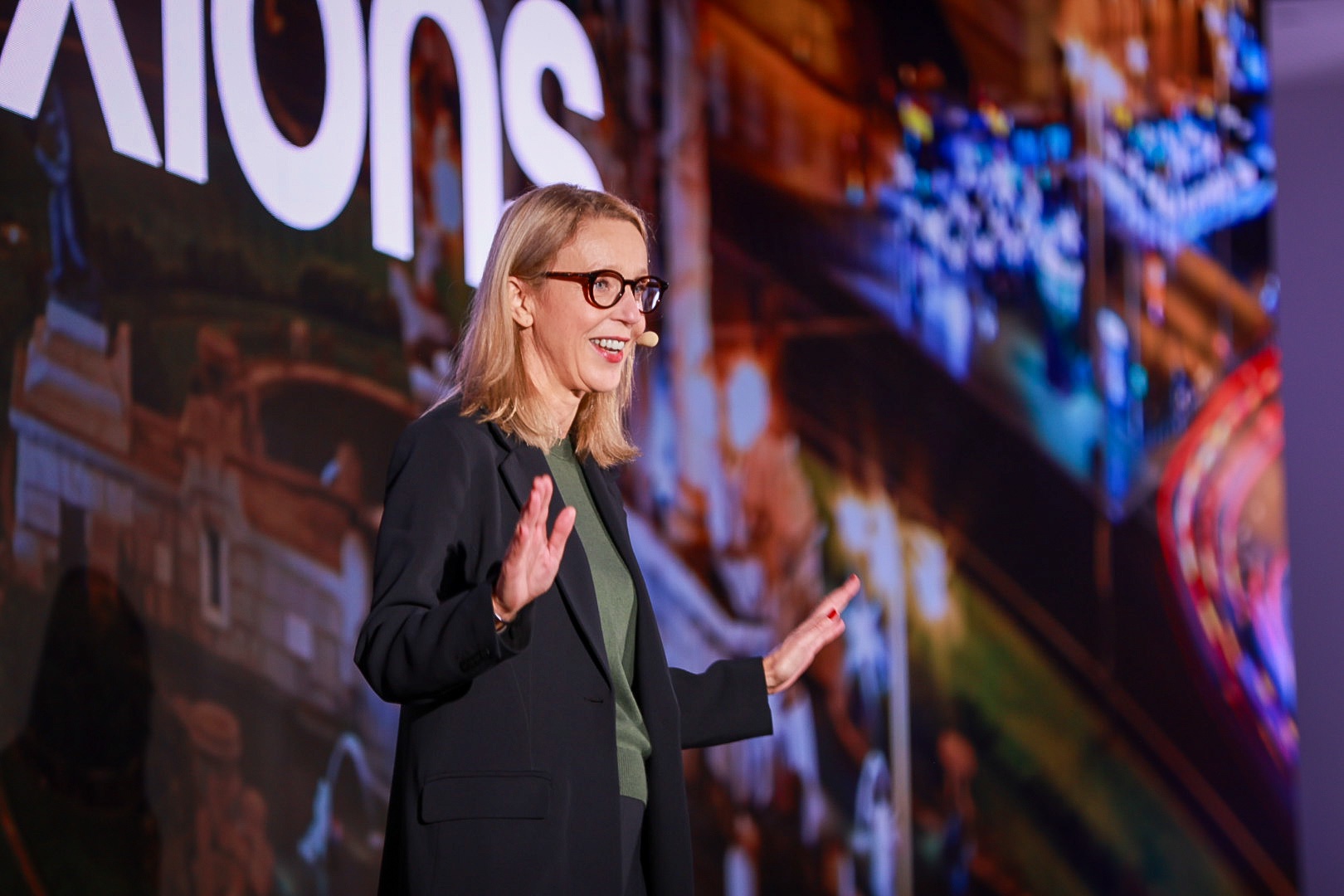
In her keynote, Kinaxis Executive Vice President EMEA Fabienne Cetre said she hears the same tension from customers across Europe: “You have opportunities in front of you. You need to deliver on them. And the world keeps changing.”
Yet Europe, she pointed out, is home to individuals and teams driving some of the most significant and ambitious supply chain transformation in the world.
Data center boom demands greater certainty
The growth of data centers is pulling on capacity, power, materials, and logistics worldwide, yet organizations are making decisions about these factors in separate processes.
Any delay in building infrastructure, an unanticipated supplier constraint, or a shift in assumptions about demand can have immediate impacts on service levels, customer commitments, margins and growth objectives.
To have greater confidence in their decision-making, data center companies want the power to evaluate demand, supply, and capacity together, rather than independently.
Kinexions EMEA hot topics: Industry forums

On Mon., Oct. 26, we hosted working sessions for customers in life sciences, consumer products, and automotive and industrial OEMs. The three-hour sessions gave them a chance to connect with and learn from their supply chain peers.
Life sciences:
- Planning is moving towards continuous orchestration.
Improving individual planning steps is no longer enough. Instead, the way forward lies in sensing change earlier, evaluating trade-offs faster, and coordinating action across functions and partners. - AI needs connected data, processes, and decisions to deliver value.
As life sciences manufacturers explore greater automation and agent-driven workflows, human judgment and oversight remain essential. - Life sciences complexity requires industry-specific capabilities.
Expiry, batch integrity, production and scheduling constraints, external partner collaboration, and regulatory requirements remain important areas of focus because they make the biggest difference in being able to serve patients.
Automotive, industry OEMs:
Discussions with representatives of a wide range of companies produced three key challenges, including:
- Getting demand right.
- For one energy technology company, this means improving how demand is generated, understood, and translated into actionable planning requirements.
- For a high-tech company, it’s about improving forecast accuracy to support more reliable planning decisions.
- Using data as a strategic advantage.
- An appliance company said they faced difficulty incorporating real-time data into constraint-based planning while building planner confidence in recommendations and outcomes.
- Making planning data easier to extract and visualize, and enabling use in AI applications is top of mind for another energy technology company.
- Balancing complexity, stability and cost.
- An automobile OEM trying said they want to find a better way to manage planning complexity across multiple brands while maintaining system performance and responsiveness.
- A food packaging company wants to optimize spare parts inventory globally to balance availability and inventory investment.
- For one luxury goods manufacturer, the challenge is smoothing production plans to manage variability and maintain stable manufacturing operations.
Participants left with practical ideas, peer insights, and a clearer understanding of how others are solving similar planning challenges.
Kinexions EMEA key takeaways

As anyone who’s been lucky enough to visit Barcelona knows, it’s a city that rewards exploration. So does Kinexions!
This year’s conference drew more than 600 customers and partners. Over three days, they joined together to learn from industry leaders, share their challenges, and hear about the latest, innovative technologies to help solve them. But Kinexions is also more than that.
“Sometimes your most memorable moments aren’t going to be what you find on the agenda,” conference host Manda Schweitzer-Miller, hinted during the opening welcome. “It’s going to be around a corner, or an unexpected door, or wherever the music takes you.”
Or maybe, after an invigorating series of breakout sessions, presentations, bootcamps, and workshops, the after party at that popular Barcelona nightclub?
“I can guarantee it’s going to be a lot of fun,” Kinaxis Chief Product Officer Andrew Bell promised.
And the survey winner? FC Barcelona. Maybe not surprising, considering the setting.
Attended and can't wait for the next one? Missed out and wished you could have been there?
Join us next October in Berlin!