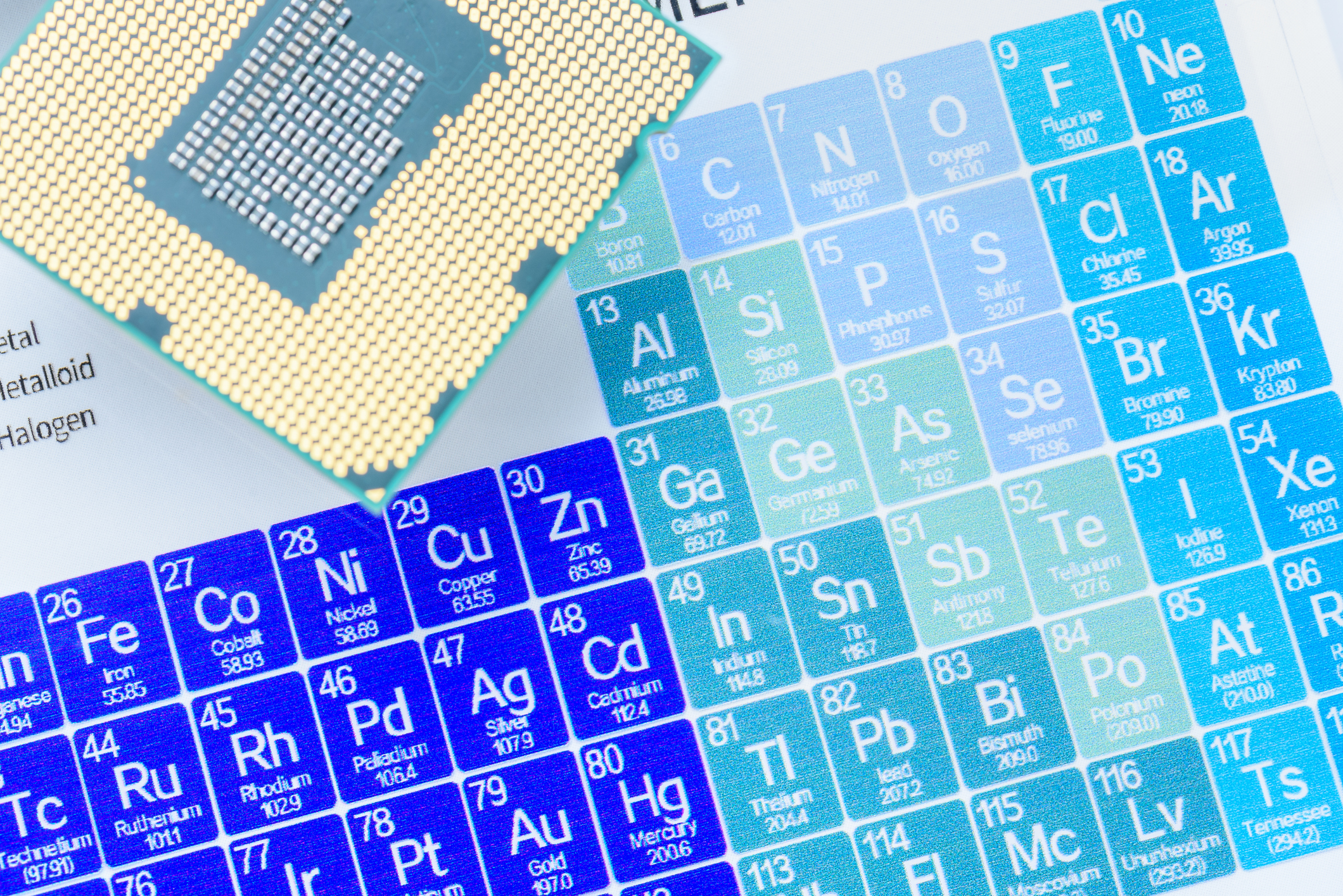
Chip shortages are becoming harder to predict. Semiconductor manufacturers are expanding capacity as demand for advanced semiconductors caused by AI growth continues to accelerate.
But the next constraint may not come from manufacturing capacity alone. It may come from smaller dependencies deeper in the supply chain that rarely get attention until they become constrained.
Right now, one of those dependencies is helium.
The invisible ingredient
Helium rarely gets the same attention as chip factories, memory supply, or advanced packaging. At roughly $10 per advanced semiconductor wafer, it can seem like a minor input in a product worth approximately $15,000.
But helium plays a critical role in producing advanced chips. It’s used in extreme ultraviolet lithography systems that manufacture the chips powering AI infrastructure.
And helium is difficult to replace. It has to be stored at extremely low temperatures and shipped in specialized containers that can cost up to $1 million each and take up to 18 months to produce.
That matters because low-cost inputs can still create high-risk disruptions. As US gas consultant Richard Brook put it in the Financial Times, if a chip material suddenly becomes unavailable, “the cost of that material is basically infinity, because you have to shut the wafer fab down.”
Why this matters for chip supply
The helium issue is not just about supply. It’s also about how fragile chip production can become when one critical input is disrupted.
Around 80% of global helium passes through the Strait of Hormuz. Helium is largely produced as a byproduct of natural gas, which ties supply closely to production in regions like Qatar. When conflict disrupted natural gas production in the region, an estimated 30%–40% of global helium supply was affected almost immediately. There's no alternative source to activate quickly.
A helium shortage does not create a clean, proportional reduction in chip output. But in semiconductor manufacturing, a single missing input can slow production across much larger parts of the supply chain.
What response capability looks like
Despite challenges, demand pressure is only increasing. IDTechEx forecasts helium use in semiconductor manufacturing could increase fivefold by 2035 as advanced chip production scales.
And chip demand rarely stays within the semiconductor industry. Automakers, electronics companies, healthcare organizations, and cloud providers all depend on reliable chip supply.
That is why a chip shortage quickly becomes a commitment problem. Companies have to commit to customer delivery dates, product launches, and revenue targets before they have full certainty over supply.
In this landscape, committing with confidence depends on how quickly organizations can understand the downstream impact of disruption and adjust decisions before constraints spread further across the network.
A delay in helium availability may start as a sourcing issue, but it can quickly affect production sequencing, inventory allocation, customer prioritization, and revenue commitments simultaneously. The companies responding fastest are not waiting for one team to finish planning before another reacts. They are coordinating supply, demand, capacity, and commercial decisions together in real time, so they can protect critical launches, reduce exposure, and make tradeoffs with greater confidence even when conditions change unexpectedly.
As constraints become more difficult to predict, companies are increasingly focused on how to optimize the high-tech supply chain for faster, more synchronized decision-making under volatility.
The next disruption may not look like helium. But the gap between a constraint appearing and an organization responding is where commitments break.